
Treasures of Lori — Fortresses, Monasteries and Caves
This is a private tour: an Amaras Tour car sets off directly from your address in Yerevan and brings you back to the address of your choice, and the price is calculated individually. The tour can be booked in two formats — with a professional driver, or with a professional driver plus a separate professional tour guide — in a Standard, Comfort, Premium or Luxury car. If you wish, professional drone filming can be added to the trip.
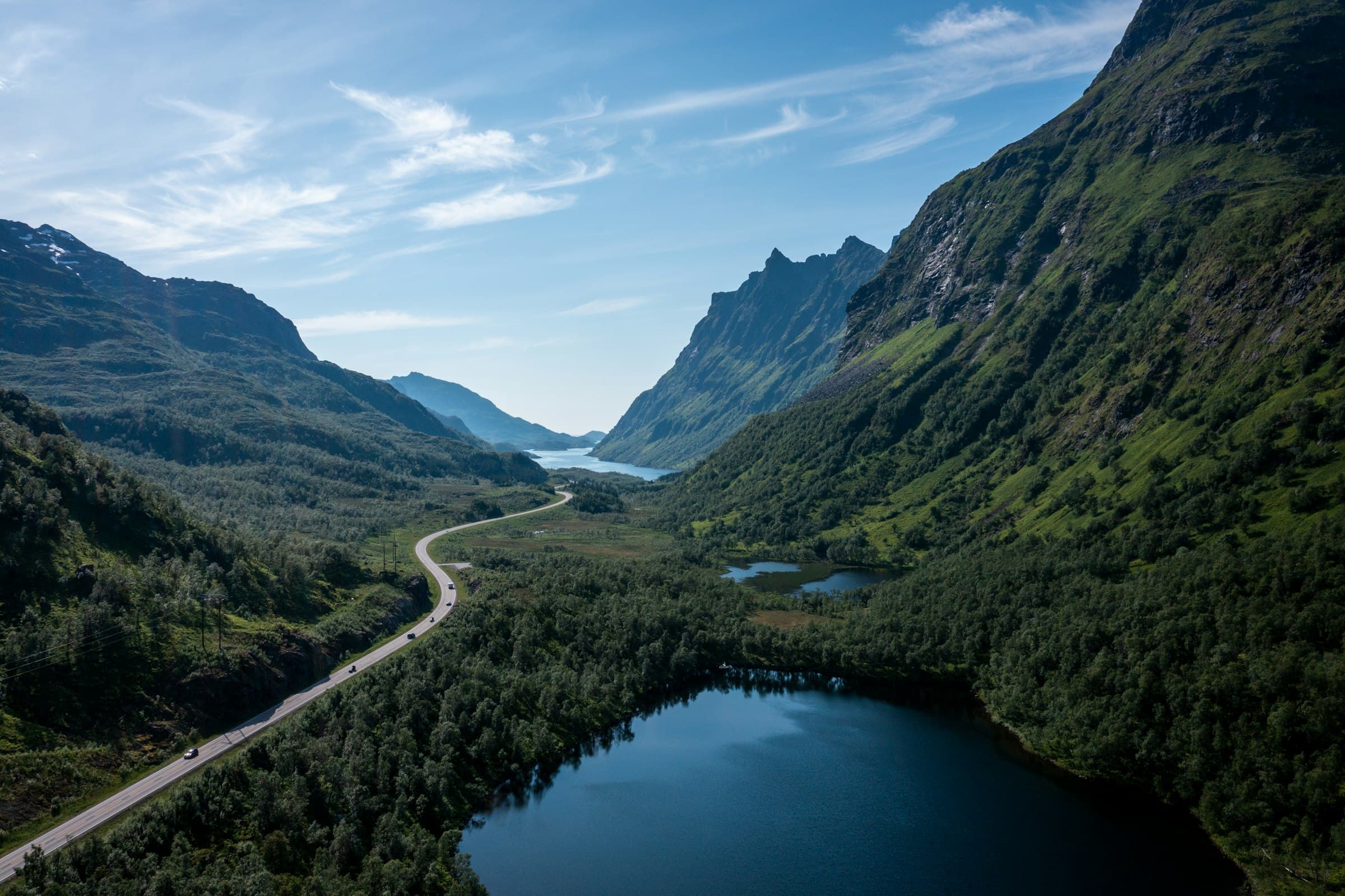
This route introduces a completely different Armenia. There are no dry Ararat Valley landscapes or red Vayots Dzor cliffs here. Lori means dense forests, deep gorges, the Debed River, rocky mountains and medieval monasteries built on the edge of vast canyons. In a single day we will see a fortress with unique frescoes, two UNESCO World Heritage monasteries, an ancient cave-and-fortress complex and one of the most unusual natural sites near Alaverdi. It is one of the richest historical routes in Northern Armenia.
From Yerevan we head north. The landscape gradually changes, and once we enter Lori the road leads us into the famous gorge of the Debed River. The Debed is one of Lori's main natural arteries, and the road runs between high rocky, wooded slopes almost alongside the river. Many of Northern Armenia's most important historical monuments are concentrated around the Debed Gorge: for centuries the roads linking Armenia's inner regions with the north and Georgia passed through here, which is exactly why fortresses, monasteries and fortified settlements appeared in Lori. Our first major historical stop is Akhtala.
Akhtala differs from almost every other monastery on our route: here we find a fortress, a monastery and magnificent medieval frescoes all at once. The complex stands on a high rocky platform surrounded on three sides by deep gorges — nature itself made this place a convenient stronghold. The fortress was built on a strategically advantageous site: the high cliffs gave natural protection on three sides, and where an approach was possible, mighty walls and towers were raised. The main fortifications are associated with the 10th century and the Kyurikid dynasty, a branch of the Armenian Bagratids. Parts of the defensive walls, the towers and the fortress entrance survive to this day.
The main sanctuary of Akhtala Monastery is the Church of Surb Astvatsatsin — the Holy Mother of God. But the most remarkable thing awaits inside: the church walls are covered with medieval frescoes, and it is they that make Akhtala one of the most unusual religious monuments in Armenia. Most of the paintings date from the early 13th century and depict New Testament scenes, Christ, the Virgin, the apostles and saints. While most medieval Armenian churches are experienced today through their architecture and stone carving, here colour plays a huge role: shades of blue, red and gold turn the interior into a true medieval artistic ensemble. The architecture and painting of the complex reveal an interplay of the different cultural traditions of the medieval Caucasus, and Akhtala's history is tied to the princely houses of the Kyurikids and the Zakarians. That makes it a wonderful place to understand how complex the political and cultural ties of medieval Armenia were. After exploring the fortress and the frescoes, we continue along the Debed.
The next stop is Haghpat Monastery. It sits on a high plateau above the Debed Gorge, and it is a completely different type of medieval complex. Haghpat was more than a monastery: for centuries it was the most important spiritual, educational and cultural centre of Northern Armenia. The monastery was founded in the 10th century, and its foundation is linked to Queen Khosrovanush, wife of the Armenian King Ashot III the Merciful. The main church, Surb Nshan, was built at the end of the 10th century; over time other buildings rose around it, forming a large monastic ensemble. In the Middle Ages Haghpat was a major centre of learning where theology, philosophy and other sciences were studied, manuscripts were copied and kept, and scholars, clergy, scribes and craftsmen worked. So Haghpat can be seen not merely as a place of prayer, but as a true intellectual centre of medieval Armenia.
The Church of Surb Nshan — the oldest and principal church of the complex — was built in 976–991. Its architecture became one of the striking examples of the development of Armenian church architecture in the 10th–11th centuries, and traces of ancient frescoes survive inside. The famous bell tower, built in 1245, deserves special attention: its unusual multi-tiered composition has become one of Haghpat's most recognisable features, and it can be seen from almost anywhere in the complex. The monastery grounds also hold the famous Amenaprkich (Holy Saviour) khachkar, dated 1273. It is one of the most expressive monuments of medieval Armenian art, with intricate carving and an unusual composition; with a professional guide it is especially rewarding to explore the symbolism of Armenian stone art here in detail. In 1996 Haghpat Monastery was inscribed on the UNESCO World Heritage List, and the site was later extended to include Sanahin Monastery. Haghpat is also connected with the famous Armenian poet and ashugh Sayat-Nova, who spent the last years of his life at the monastery — so Haghpat is linked not only to medieval architecture but also to later Armenian cultural history.
Very close to Haghpat lies a completely different historical site — the Zarni-Parni cave-and-fortress complex. There is no classic monastic space here: instead there are natural caves that people have used since ancient times and that in the Middle Ages were adapted for living and defence. According to local historical tradition, in the 10th century Prince Zareh built a defensive wall with a tower in front of the large cave and turned it into a fortress; the neighbouring cave was fortified as well. In this way natural rock and human architecture became a single defensive complex: stone walls were built in front of the entrances, there were rooms inside, and the cliff itself served as a huge natural fortress. The main cave spans several hundred square metres, and inside you can see water seeping naturally through the rock. The area is also associated with the tradition of safeguarding precious manuscripts and church treasures, as in hard times the caves could serve as shelters. That is why Zarni-Parni complements Haghpat so well: first we see a great monastic centre of learning, and then protected caves among the cliffs. Today there is a small museum space here with objects related to the history and daily life of the region, and the site offers beautiful panoramas of Lori's wooded mountains and gorges. The complex is open seasonally and may be closed in winter; the last stretch of road is not an ordinary paved highway, and depending on the car and the road conditions part of the way may be done on foot, so Amaras Tour checks in advance whether a visit is possible.
After Zarni-Parni we continue to Lori's second great monastery, Sanahin, which stands on a high plateau above Alaverdi. Sanahin and Haghpat are often called sister monasteries: they are only a few kilometres apart and developed in the same era. Most of the complex took shape in the 10th–13th centuries. One of the oldest main churches, Surb Astvatsatsin, dates from 928–944, while the Church of Amenaprkich (the Holy Saviour) was completed in 966, its construction linked to Queen Khosrovanush. Like Haghpat, Sanahin was not only a monastery but also a major centre of learning, where the humanities and medicine were studied, scholarly works were written, books were copied, and miniature painters and calligraphers worked; the monastery was especially renowned for its school of manuscript art. One of the most interesting buildings of the complex is associated with the famous Academy of Sanahin — for its time the monastery was a true centre of intellectual life, where religion, philosophy, science and art existed side by side.
Sanahin was also connected with the Kyurikid dynasty, one of the branches of the Bagratids. The monastery served as an administrative and spiritual centre and as the family burial place of the dynasty, which gave it political as well as religious significance. More than 50 khachkars survive on the grounds, some of them considered masterpieces of medieval Armenian sculpture; the stone carving here shows how varied the art of the khachkar was — even two crosses made by different masters almost never look alike. Together with Haghpat, Sanahin is a UNESCO World Heritage Site: the two complexes are considered among the finest examples of Armenian religious architecture of the 10th–13th centuries and reflect the period when Northern Armenia was a major spiritual and intellectual centre. After Sanahin, a panorama of Alaverdi and the deep Debed Gorge opens up before us. Alaverdi is one of the most unusually situated towns in Armenia: it literally stretches along the river between high mountains, and its roads, bridges, residential districts and historical monuments all share a very narrow space between the cliffs.
The final stop of our journey is Mendz Er Cave. In the Lori dialect the name means “Big Cave”. It lies in the Sanahin and Alaverdi area and has become one of the region's interesting tourist spots. After the rich history of Akhtala, Haghpat and Sanahin, the mood of the trip changes here: instead of monastic architecture there is rock, a cave and the panorama of Lori. Mendz Er is interesting above all for its combination of a natural setting and views over Alaverdi, the Debed Gorge and the surrounding mountains. It is a good place to end a long historical day more calmly — to take photos, rest a little and look at Lori not from a monastery but from a natural viewpoint.
The whole day is built around a gradual change of impressions: first the mighty fortress of Akhtala, then majestic Haghpat, after that the Zarni-Parni cave fortress, then ancient Sanahin, and only at the end Mendz Er and the panorama of Lori. This way the route never turns into a string of identical monasteries, and each stop leaves a completely different impression. Here history literally stands above the gorges: monasteries hide among wooded mountains, fortresses rise over the cliffs, and ancient caves recall how people adapted to Lori's harsh nature over the centuries.
Useful information
Pickup
At the agreed time, an Amaras Tour car arrives directly at the address you give us in Yerevan — your hotel, apartment or another place agreed in advance.
There is no shared meeting point. The tour is run only for you and your party.
- Meeting time: 07:15
- Departure: 07:30
Lunch
Meals are not included in the base price of the private tour.
As the trip is a long one, we plan time for a proper lunch. At the guests' request, a stop can be arranged:
- Near Haghpat
- In Alaverdi
- At one of Lori's restaurants
On a private tour, the place and length of lunch are agreed in advance.
Return to Yerevan
After visiting Mendz Er we head back to Yerevan.
At the end of the trip, the Amaras Tour car takes you directly to the address you specify — your hotel, apartment or another place agreed in advance.
The approximate length of the trip is 12–13 hours.
What's included: tour with a professional driver
The private tour can be booked in two different formats.
- A private car of the chosen category
- Professional driver
- Pickup directly from your address in Yerevan
- Akhtala Fortress and Monastery
- Haghpat
- Zarni-Parni
- Sanahin
- Mendz Er Cave
- All transfers along the route
- Panoramic and photo stops
- Return directly to the address you specify
- Bottled water
- Armenian treats from Amaras Tour
The professional driver provides transport, but does not replace a professional tour guide.
What's included: tour with a professional guide
- A private car of the chosen category
- Professional driver
- A separate professional tour guide
- Pickup directly from your address
- Full guided tour throughout
- History of Lori and the Debed Gorge
- Guided tour of Akhtala Fortress and Monastery
- A detailed talk on the medieval frescoes
- Full guided tour of Haghpat
- History of monastic learning and manuscript culture
- History of Zarni-Parni
- Full guided tour of Sanahin
- The story of the Bagratids and the Kyurikids
- History of Armenian khachkars
- Mendz Er Cave
- Panoramic and photo stops
- Return directly to your address
- Bottled water
- Armenian treats from Amaras Tour
The format with a professional driver and the format with a professional driver plus a separate professional guide are priced separately.
Car categories
- Standard — a comfortable car for a private trip at the best price
- Comfort — a car with enhanced comfort for a long route
- Premium — a high-end car with more space and comfort
- Luxury — an executive-class car for the most comfortable long-distance travel
The specific car model is chosen based on the number of travellers, the selected category, the season and vehicle availability.
How the price is calculated
No fixed price is listed on this page.
The price is calculated individually and depends on:
- The number of travellers
- The chosen car category
- The format — with a professional driver or with a separate professional guide
- Additional services
- The season
- Changes to the itinerary
Once we have the necessary details, Amaras Tour calculates the exact price of the trip.
Entrance tickets
Visiting the Akhtala, Haghpat and Sanahin monasteries usually does not require a standard entrance ticket.
Zarni-Parni and Mendz Er are separate tourist sites, and admission may be charged.
Current conditions and prices are checked before the trip.
Professional drone filming
If you wish, professional drone filming can be added to your private trip.
Lori is one of the most beautiful regions of Armenia for aerial filming. Especially striking from above are:
- The Debed Gorge
- Lori's wooded mountains
- Scenic roads
- The Haghpat area
- The surroundings of Zarni-Parni
- Panoramas of Alaverdi
- Open natural areas near Mendz Er
Aerial filming takes place only where flights are permitted, in suitable weather and in compliance with safety requirements. At historical and cultural monuments, the drone can only be flown where this is allowed.
What to bring
We recommend:
- Comfortable closed shoes
- A light sweater or windbreaker
- A hat
- Water
- Sunglasses
- A light snack
- Personal medication if needed
Lori is one of the greenest and most humid regions of Armenia. Even when it is sunny and hot in Yerevan, it can be noticeably cooler, cloudy or rainy here.
Physical difficulty
Easy to moderate. No special physical fitness is required.
However, the day includes walks around monastery complexes, stairs, stone surfaces and stretches near the caves.
For older guests, the programme can be adapted and the walking sections shortened.
Seasons
Akhtala, Haghpat and Sanahin can be visited almost all year round. Visiting the cave sites depends on the season, the weather and opening hours.
Lori is especially beautiful in spring, when everything turns bright green; in summer, when it is cooler here than in Yerevan; and in autumn, when the forests of the Debed Gorge turn gold, red and orange.
In winter the programme may be adjusted depending on road conditions and access to the caves.
Can the route be changed?
Yes. This is a private tour. By prior arrangement you can:
- Change the departure time
- Spend longer at Akhtala
- Spend more time at Haghpat or Sanahin
- Arrange lunch
- Add extra panoramic stops
- Add professional drone filming
- Skip a cave site in bad weather
- Adapt the programme for children or older guests
If the duration or mileage increases significantly, the price is calculated separately.
Recommended departure time
The route is long, so an early start lets you visit the main sights at a relaxed pace and leaves enough time for Haghpat, Sanahin and the cave complexes.
Duration
Approximately 12–13 hours.
The duration depends on:
- Traffic conditions
- Time spent at Akhtala
- The guided tours at Haghpat and Sanahin
- The visit to Zarni-Parni
- Lunch
- The visit to Mendz Er
- Additional stops
- Drone filming
Who this route is for
This private tour will especially appeal to those who want to see the historic, green north of Armenia.
In one day we combine: Akhtala Fortress → unique frescoes → UNESCO-listed Haghpat → the Zarni-Parni cave fortress → UNESCO-listed Sanahin → Mendz Er → the Debed Gorge.
The route is ideal for:
- History lovers
- Admirers of medieval architecture
- Anyone interested in Armenian frescoes and khachkars
- Families
- Couples
- Small groups
- Nature lovers
- Photo and video enthusiasts
- Those who want to see a completely different Armenia
Amaras Tour — discover Lori: from ancient fortresses and frescoes to UNESCO monasteries and caves among the mountains.
Route
- 1Akhtala
- 2Haghpat
- 3Zarni-Parni
- 4Sanahin
- 5Mendz Er Cave